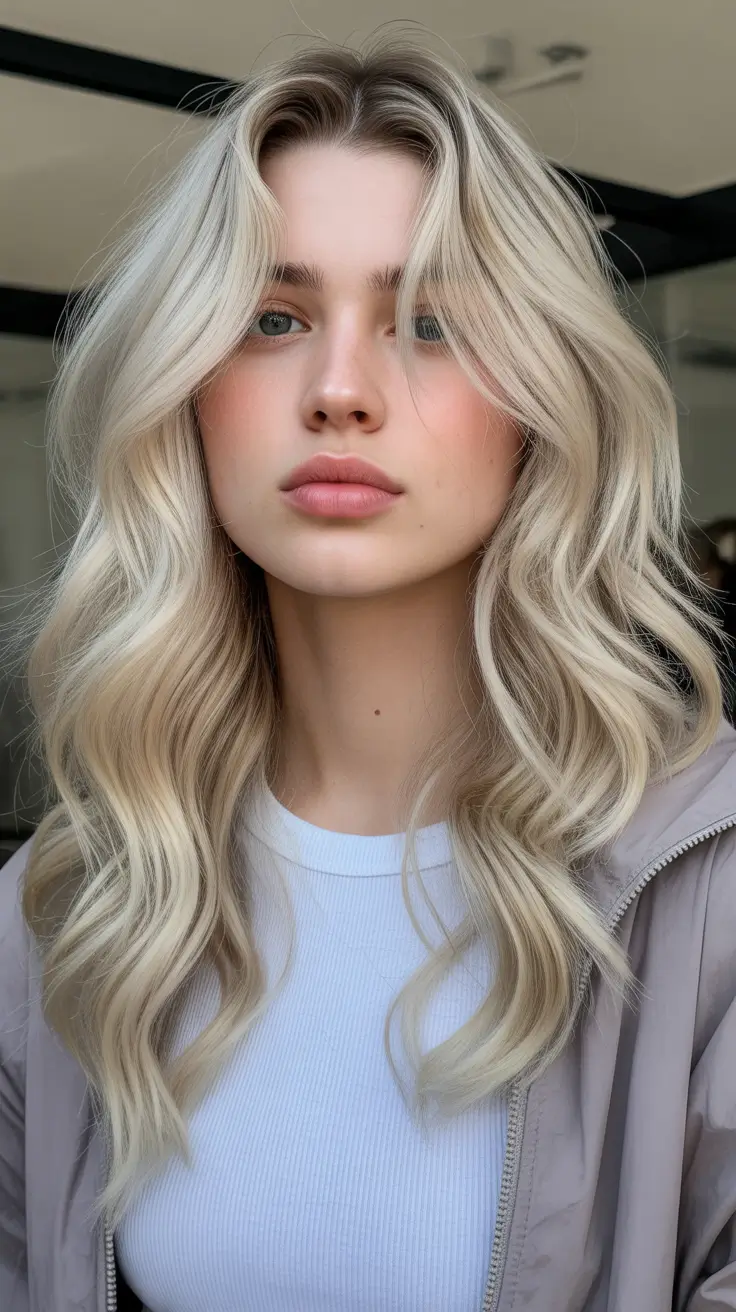
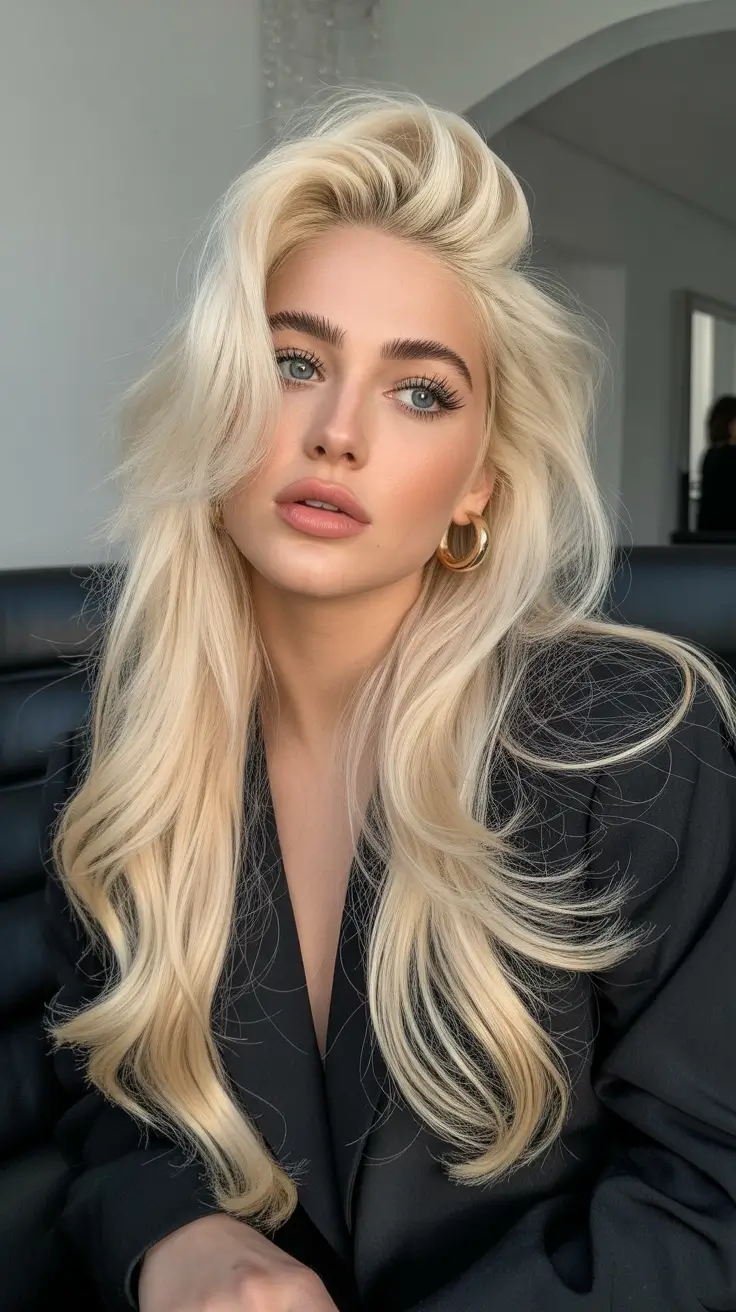
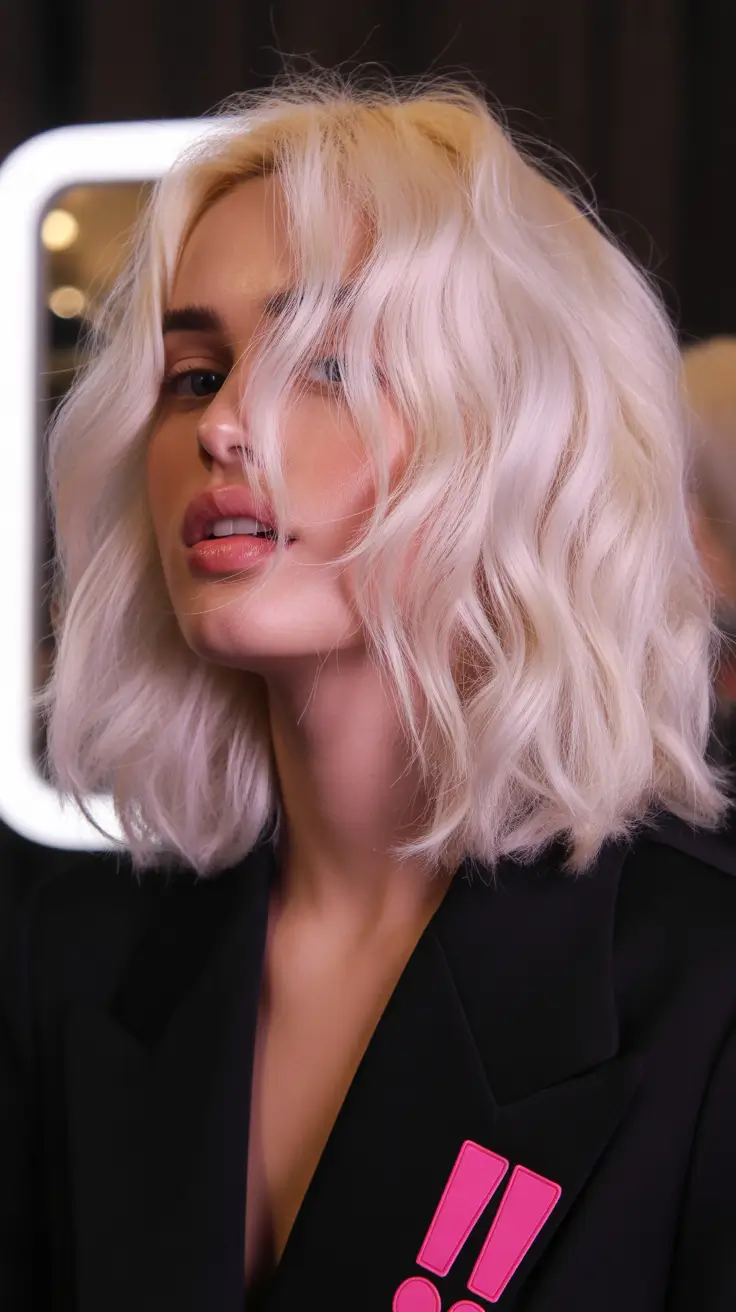
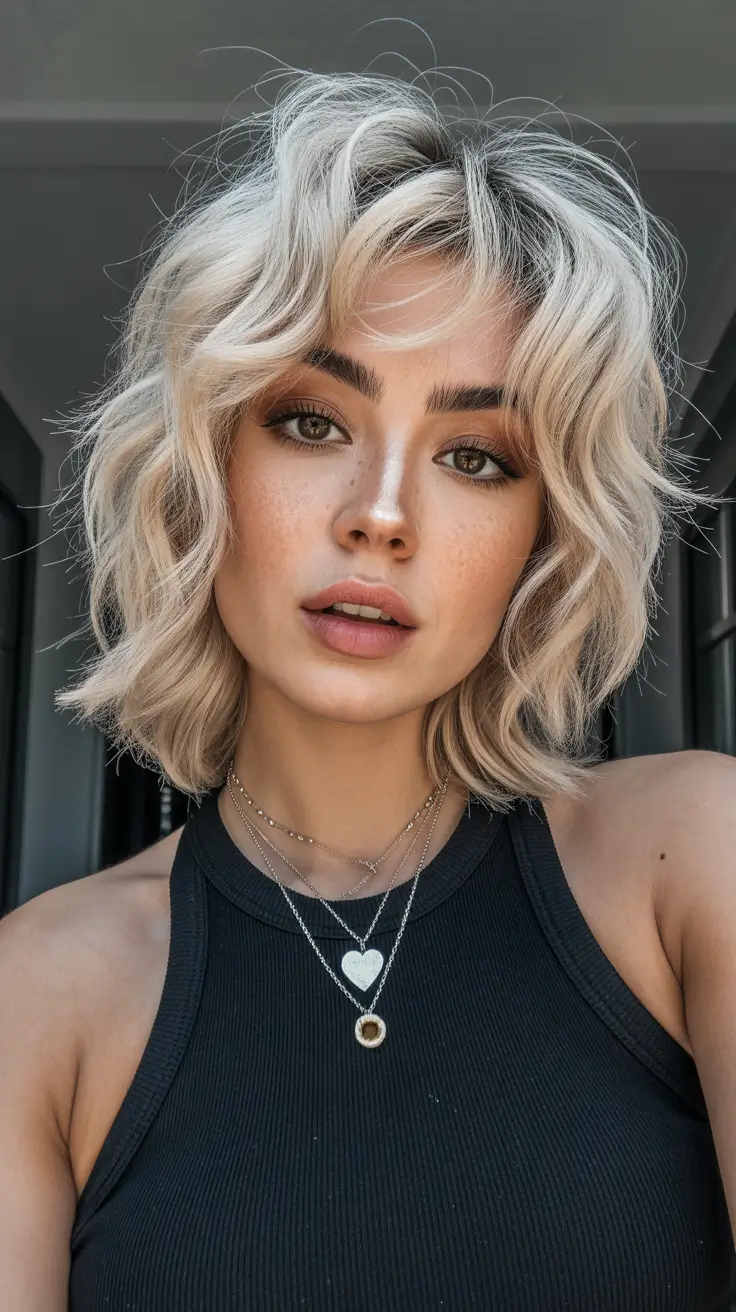
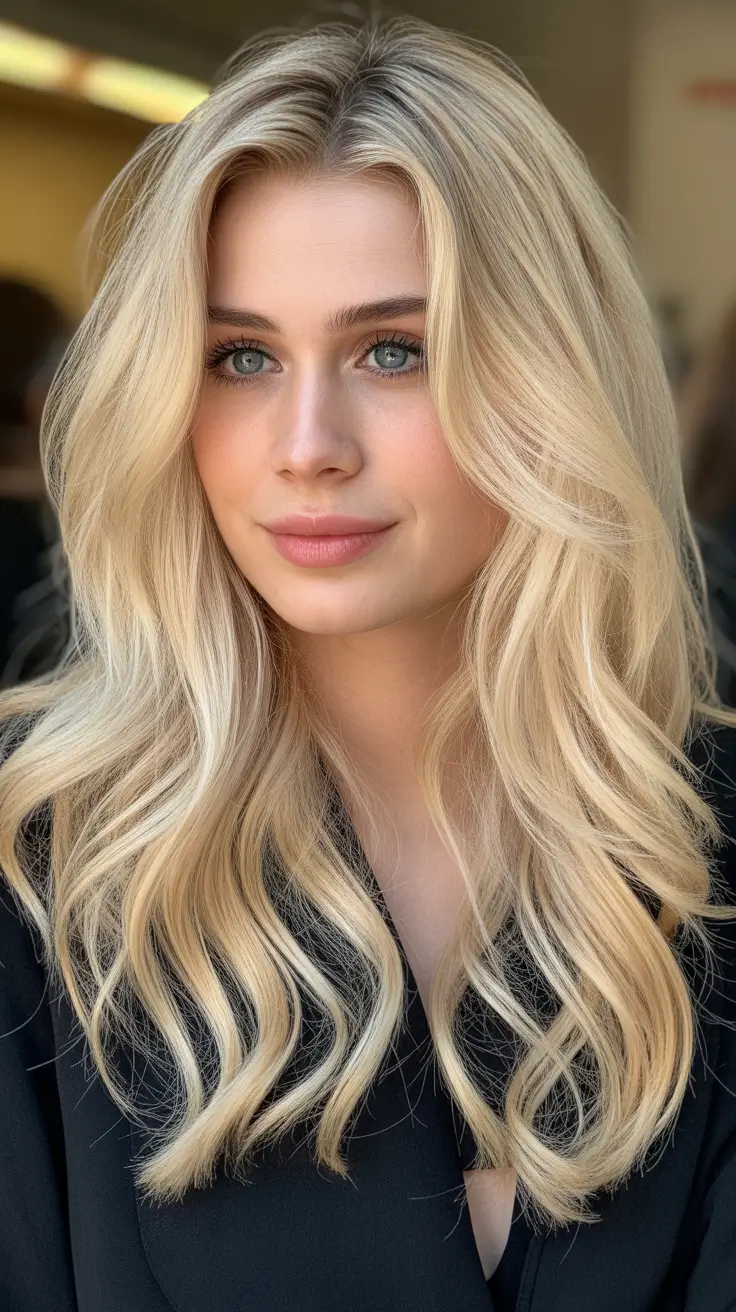
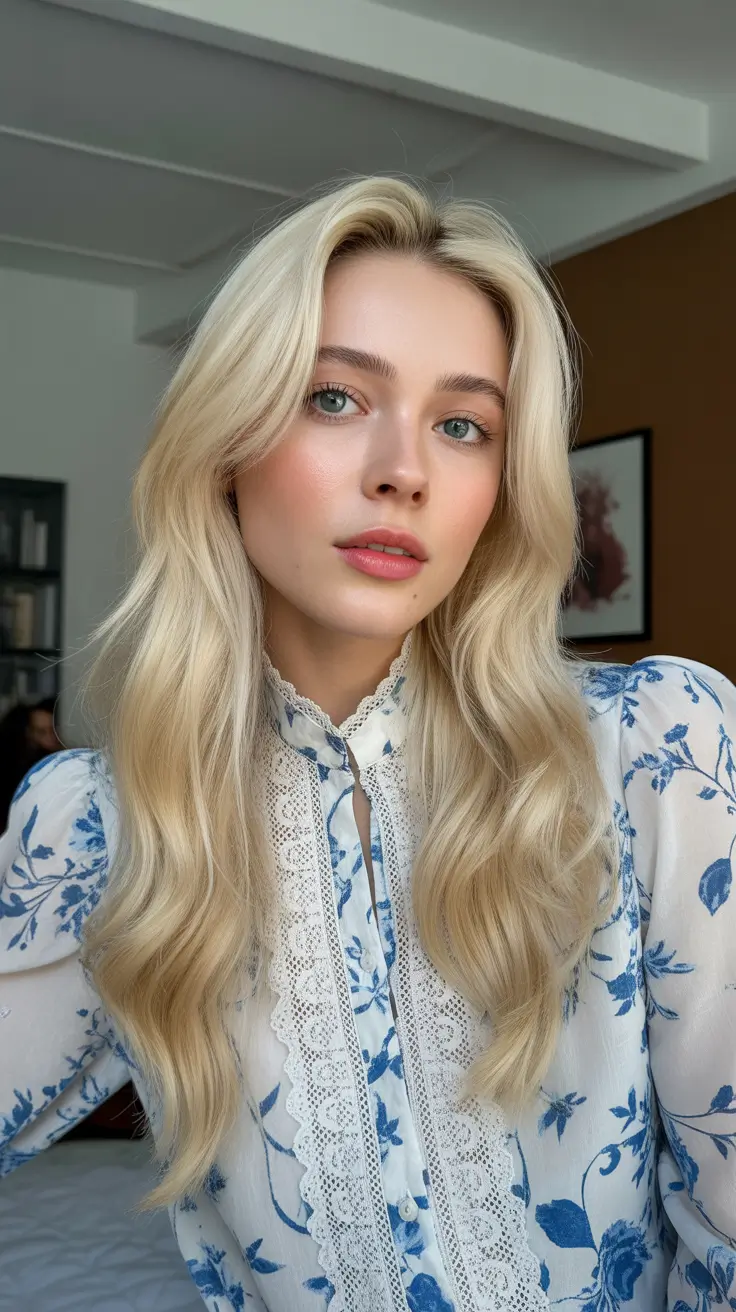
The half up half down style occupies a unique middle ground—polished enough for occasions that call for some intentionality, relaxed enough to feel effortless rather than overwrought. It's a silhouette that works across hair lengths and textures because the basic architecture is so forgiving: the upper portion gathers, the lower portion flows free. What changes from one interpretation to the next is how that top section is secured, where the division falls, what texture or movement defines each half, and how the whole composition reads against different hair densities and lengths.
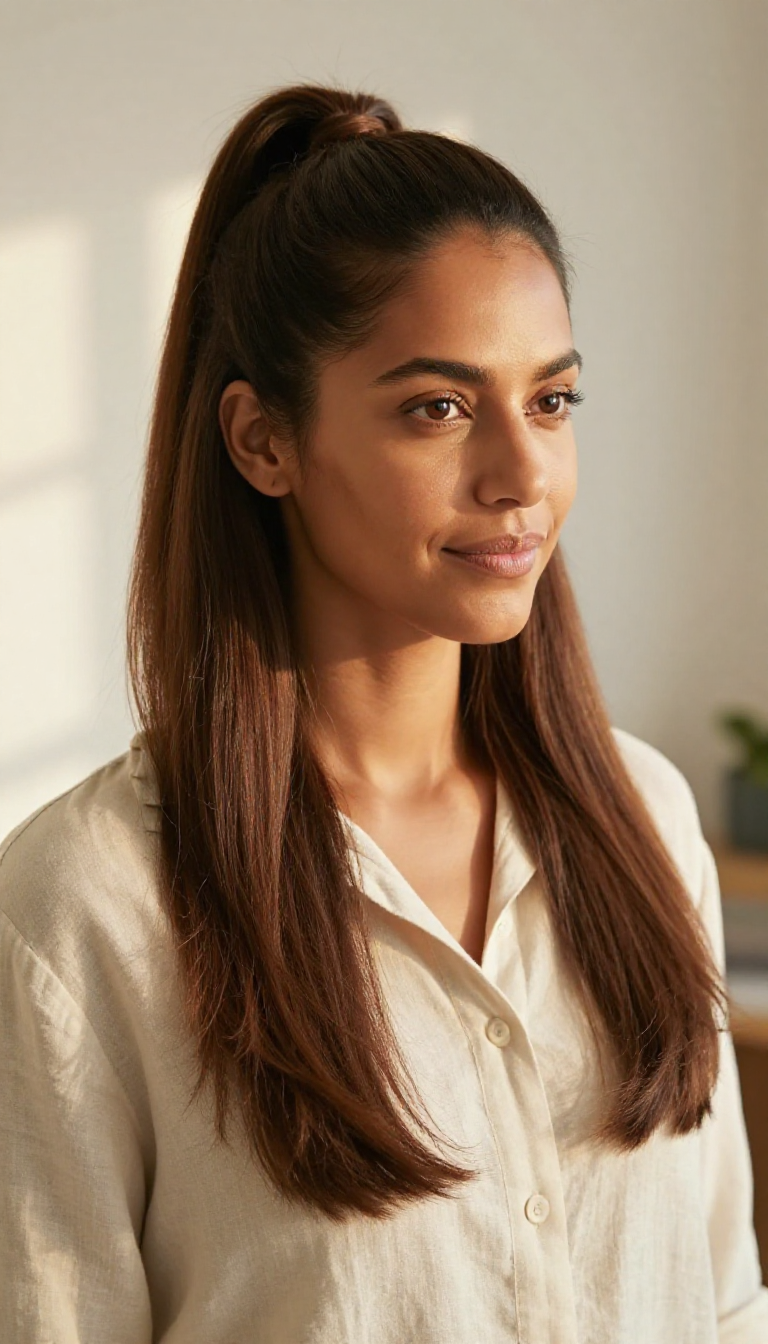
#5 Clean Centered Ponytail: The Simplest Half-Up Anchor
The foundation of this half-up style is its restraint. Rather than gathering a large crown section, this look pulls only what's necessary into a low, centered ponytail positioned at the back of the crown. The result feels both intentional and unfussy—the gathered section sits firmly in place without creating bulk or tension, while the remaining hair falls completely free from just below the ponytail downward. On straight hair, this distinction becomes especially clear: the sleek, controlled top half creates visual contrast against the unrestricted lengths below, making the half-up structure immediately readable. The straight texture also means the free-falling section stays smooth and unified, which emphasizes how deliberate the gathered portion truly is. This works particularly well on shoulder-length or slightly longer hair, where there's enough weight below to balance the gathered crown without the style feeling top-heavy.
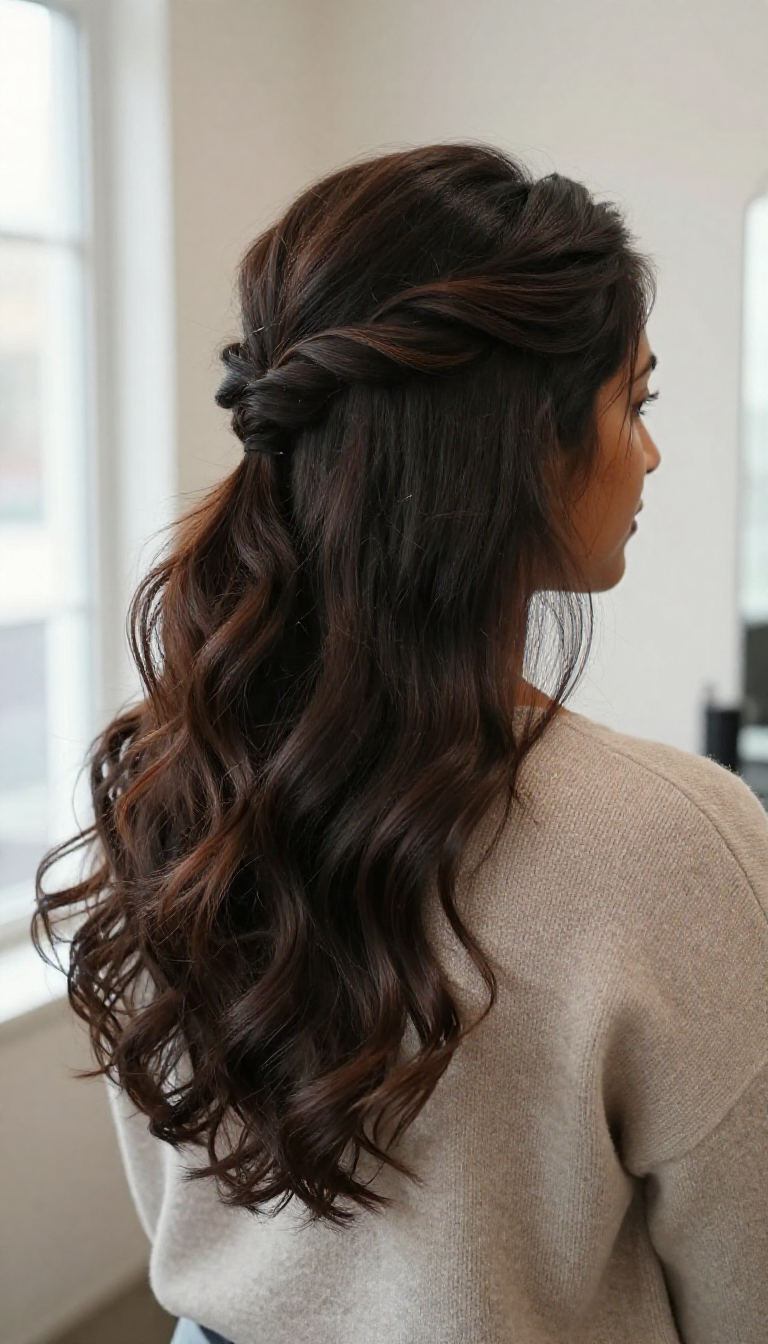
#4 Twisted Side Placement: Anchoring Movement in Wavy Hair
Where straight hair reads as a clean division between gathered and free, wavy hair reveals a different half-up approach—one that works with natural movement rather than against it. This style twists the crown section gently and pins it to the side rather than center, creating an asymmetrical anchor point. The face-framing pieces remain unbound, left loose around the cheekbones to fall into the cascading waves below. The rear-three-quarter view is essential here, as it shows how the twist sits just off-center and how the wave pattern continues uninterrupted through the lower section, creating a sense of flowing movement that originates from a fixed point rather than a strictly divided line. The bobby pins remain visible in the rendering, which honestly reflects how this style is actually constructed—the gathered section isn't heavy or formal, just strategically placed to organize the hair without flattening the natural texture.
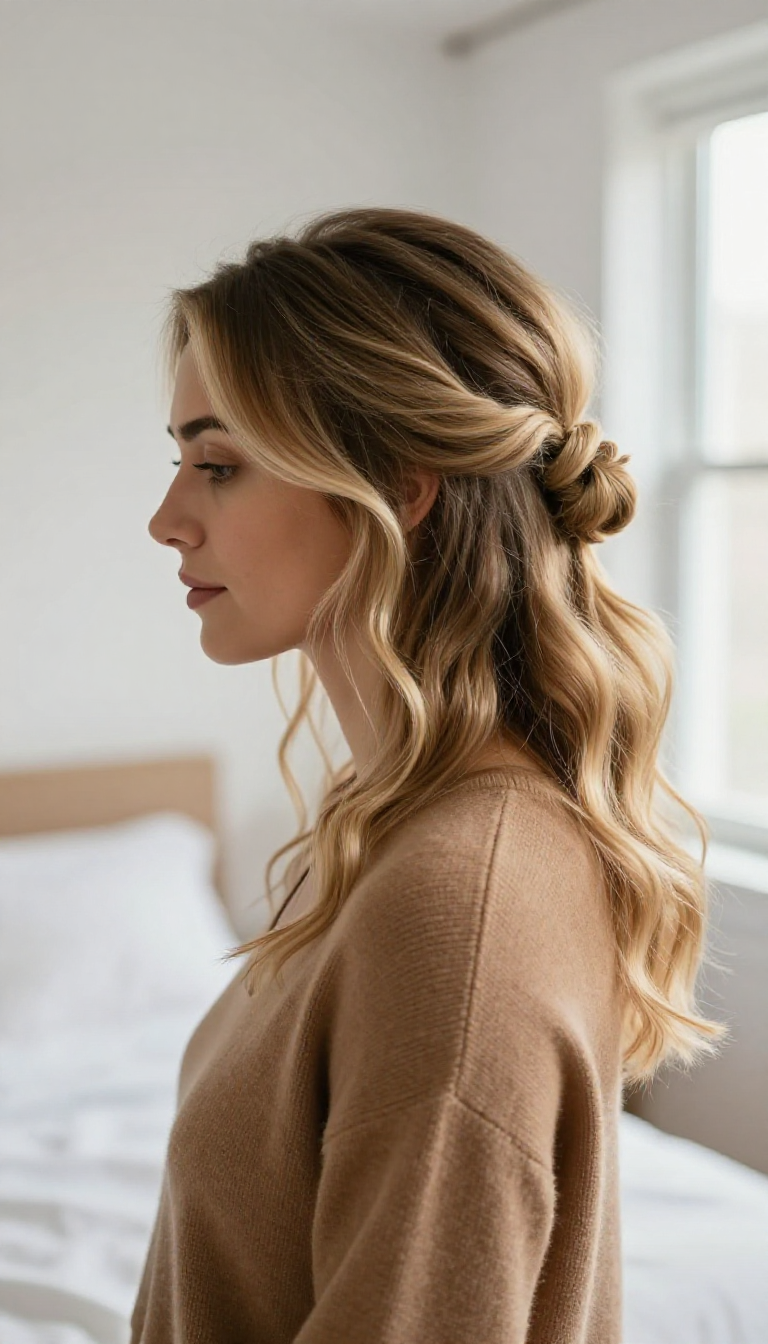
#3 Loose Bun with Released Face-Framing: Texture-Forward Effortlessness
The profile angle transforms how we understand this half-up arrangement. From the side, you can see exactly where the loose bun sits—low at the crown—and how the released face-framing pieces create intentional separation from the gathered section. Three or four delicate strands escape on either side, framing the cheekbones and jaw before blending into the wavy lengths below. The waves themselves are textured but controlled, suggesting a style that works with lived-in, dimensional hair rather than heavily styled curls or uniform waves. What makes this version distinct from a standard bun-and-framing approach is the scale: the gathered section is deliberately undone-looking, a loose bun rather than a tight one, which prevents any severity and lets the overall impression remain soft and approachable. The side profile also clarifies that the bulk of the hair flows down the back and over one shoulder, giving the style asymmetrical visual weight that reads as both intentional and relaxed.
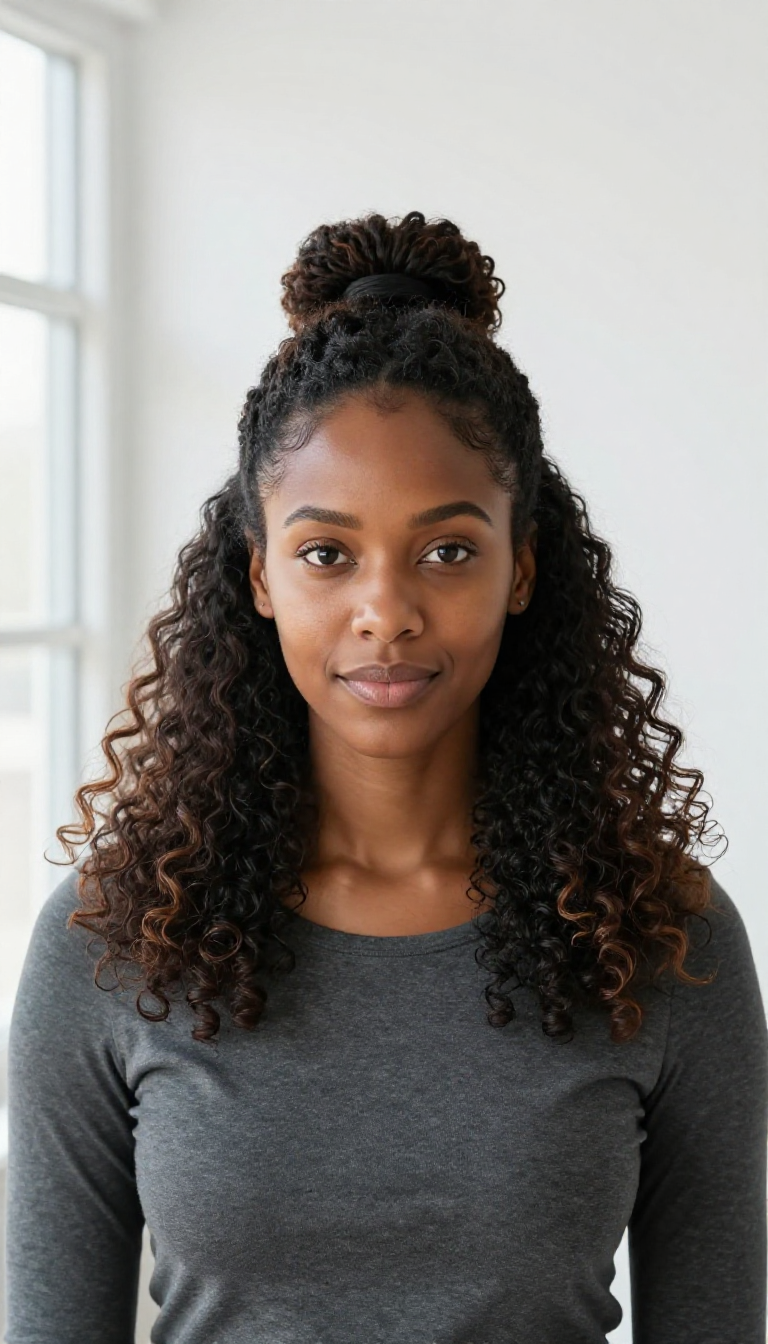
#2 Sleek Crown with Curly Freedom: Texture Contrast in Half-Up
This arrangement creates powerful visual interest through direct contrast: the upper section is gathered tightly and smoothly at the crown, creating a sleek, defined silhouette, while the lower section maintains its full natural curl and volume. On curly hair, this distinction reads more dramatically than on straight or wavy textures, because the curls themselves are so visibly defined and three-dimensional. The gathered ponytail at the crown sits firmly in place, showing no frizz or escaped pieces, which throws the freedom of the curls below into sharp relief. The face-framing pieces remain unbound, allowing the curl pattern to frame the face naturally while the bulk of the curls fall shoulder-length and full. From the front-facing angle, the half-up structure reads immediately—the eye moves from the neat crown gathering down to the textural richness below—and that movement is actually what makes the style work. Without the neat upper section, these curls alone might read as simply down-and-unstyled; with the gathered crown, the same curls become a deliberate styling choice.
#1 Dual Twisted Sections: Building Structure in Straight Hair
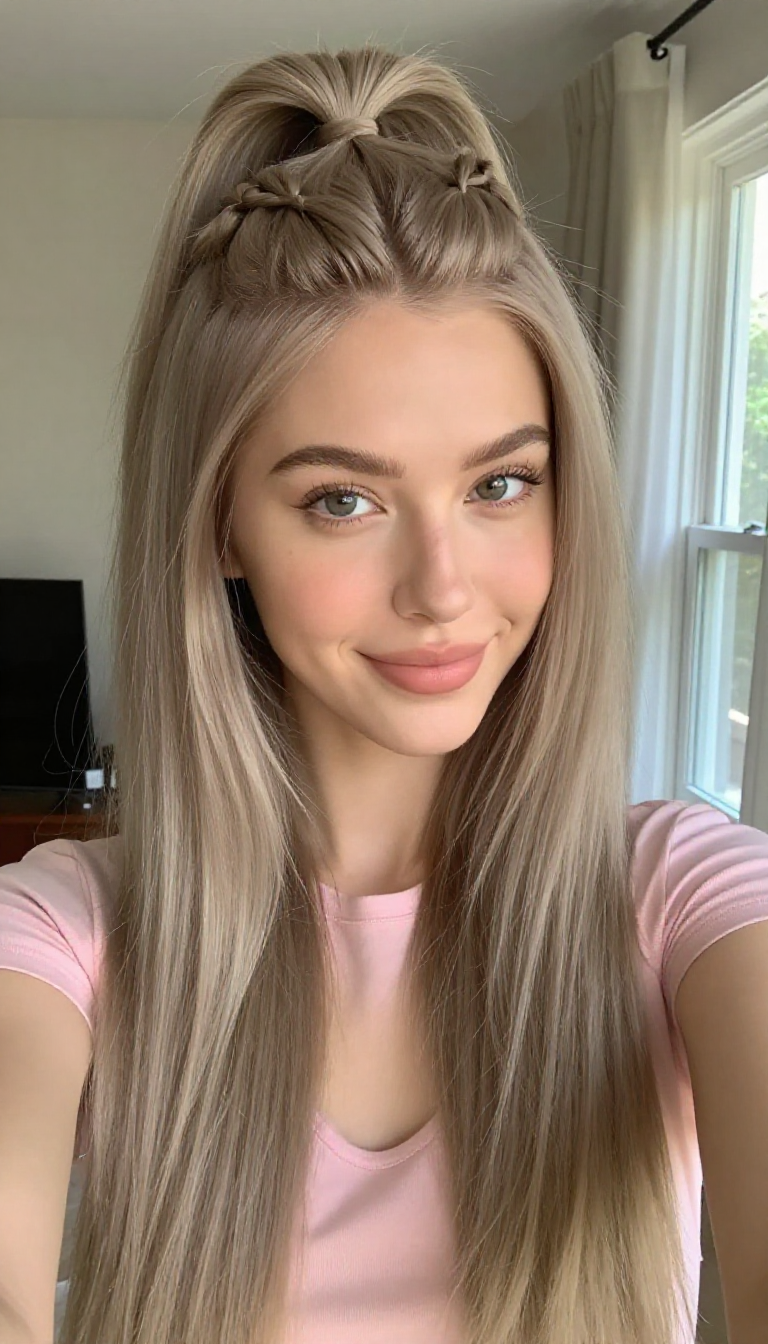
This variation demonstrates how two smaller twists, working together, can replace a single gathered section as the half-up anchor. Rather than a single ponytail or centered gather, this style uses two delicate sections twisted from each temple and secured together at the back of the head. The effect is more intricate than a single gather while remaining completely achievable on straight hair—the twists are tight enough to stay in place but loose enough to feel intentional rather than fussy. Multiple face-framing pieces are left loose in front, falling naturally to frame the face and blend into the straight lengths below. What distinguishes this approach is its emphasis on construction: you can see exactly how the style is built, making it feel accessible and replicable rather than effortlessly random. The straight texture works in the style's favor here, because it means the released pieces stay smooth and graceful, and the twists maintain their definition without requiring curl-pattern support. The selfie-style angle and genuine expression reinforce that this is an everyday, achievable styling strategy, not a more formal or labor-intensive arrangement.
The appeal of half up half down hairstyles lies in their flexibility. Whether the gathered section sits high and tight, soft and voluminous, twisted, braided, or simply clipped, the style adapts to what you're working with—shorter hair, longer hair, fine texture, thick density—without requiring you to choose between containment and flow. The variations shown here make clear that the format itself doesn't demand one particular aesthetic or execution; it's the specific choices within that framework that determine whether a half up half down style reads as romantic, modern, undone, or intentional.