Some of the links in this post might be affiliate links. This means that if you click on the link and make a purchase, I’ll receive a small commission – at no extra cost for you, which helps me cover the costs for this blog
Fall offers a natural rhythm for getting dressed—the season almost decides what you reach for. These ten outfits explore how a few key pieces shift and layer through early-to-late autumn, from straightforward foundation pairings to more deliberate color and texture choices. Each look works because it respects proportion, pays attention to how layers interact, and stays grounded in garments that actually work together rather than demand a specific occasion. Whether you're dressing for a casual morning, a market browse, or a transition between spaces, the patterns here show how small adjustments—a tuck, a scarf, an open coat—change what a familiar combination says.
#10 The Camel Coat Over Neutral Layers
A camel-toned structured coat over a cream ribbed turtleneck and dark jeans establishes the foundation most fall outfits return to. The coat's neutral warmth sits cleanly between the cream and the dark trouser, making both pieces read more intentionally. The turtleneck's visible ribbed texture gives the upper half subtle depth without competing with the coat's clean lines.

The dark trouser grounds this combination—it prevents the camel and cream from reading too pale or washed out, and it creates a visual anchor that keeps the lighter upper half from floating. Ankle boots in a similar dark tone complete the proportion without adding visual weight at the hem. What makes this particular pairing work is restraint: three colors, clear tonal relationships, and no pattern to distract from the silhouette itself. This is the outfit that teaches you how pieces speak when nothing is fighting for attention.
#9 Rust Cardigan and Cream Textured Layers
A rust-colored cardigan layered over a cream textured shirt creates a warm color story that feels natural to fall without leaning on predictable brown or burgundy. The rust sits between orange and brown on the color spectrum—it's saturated enough to read as a statement piece but earthy enough to feel effortless. The cream layer beneath provides the visual lift that keeps the rust from reading too heavy.

The cardigan's drape and the shirt's visible weave texture create dimension in the upper half. This pairing works particularly well when you want a softer structure than a blazer but more presence than an unstructured sweater. The warmth of the rust against skin tone, and the breathing room the cream provides in the layering, make this combination feel alive rather than simply seasonal. If you're wearing this with neutral bottoms, the cardigan becomes the focal piece naturally—it doesn't need additional pattern or accessory weight to stand on its own.
#8 Burnt-Orange Blazer with Rolled Sleeves
A burnt-orange blazer in an oversized cut, worn over a simple white tee and tapered trousers, demonstrates how pushing the sleeves up transforms structure into something more casual. The sleeve roll removes the formality the double-breasted closure might otherwise suggest, making the blazer readable as a weekend piece rather than workwear. The white tee underneath stays completely plain—it doesn't need pattern or visual complexity when it's playing a supporting role to such a distinct outer layer.

The trouser's tapered line provides proportion contrast to the blazer's volume, keeping the silhouette from reading oversized top-to-bottom. Burnt orange sits deeper and richer than a standard rust or terracotta, which means it holds weight visually even when the blazer is loosely fitted. This pairing teaches you that a patterned scarf—as the one being examined here—adds visual interest without needing to coordinate precisely; the burnt orange is already commanding enough that a complementary accent becomes optional rather than necessary.
#7 Forest Green and Cream Proportion
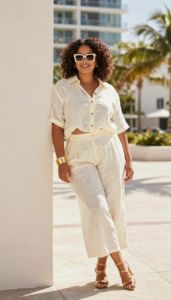
A fitted forest-green turtleneck tucked into high-waisted cream trousers creates a clean color block—one that feels more interesting than the obvious neutral-on-neutral because the green carries real visual weight. The tuck restores waist definition and creates a clear horizontal line that divides the look into two distinct parts. Because the turtleneck is fitted rather than loose, the tuck doesn't add bulk; instead, it establishes proportion and prevents the cream from dominating the lower half.

The brown loafer-style shoe repeats the warmth of the cream without matching it exactly, which keeps the lower half from reading as all one tone. The leather crossbody bag in a cognac or rust-adjacent brown adds another warm note that balances the green's coolness. This combination works because the green is saturated enough to anchor the outfit without feeling heavy, and the cream provides breathing room for the eye. The turtleneck's fit and the high trouser waist do most of the visual work—the accessories support rather than carry the idea.
#6 Layered Depth Under a Statement Coat
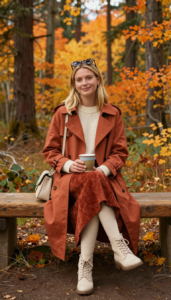
A burgundy structured coat worn over darker layers—a glimpse of what appears to be a darker turtleneck or shirt visible at the neckline—creates visual depth through color layering rather than bulk. The burgundy reads as autumn's richest warm tone, and the darker layer beneath amplifies that richness without the wearer being buried in weight. The coat's double-breasted structure and substantial shoulder line give it presence, and the burgundy color is saturated enough that it doesn't need pattern or texture to feel intentional.

The visible layering at the neckline is functional as well as visual—it shows how much thoughtfulness goes into a fall outfit that needs to work across temperature changes. The coat's length and cut suggest this is a piece that works for various occasions, from casual errands to slightly dressier moments. Burgundy sits at the intersection of autumn staple and color choice; it's familiar enough to read as effortless but distinctive enough that the coat becomes the outfit's anchor rather than simply background.
#5 Chunky Cream Sweater and Cognac Skirt
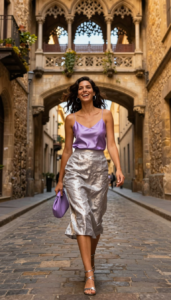
A chunky-knit cream sweater paired with a cognac-toned slip skirt creates an interesting proportion play—the sweater's substantial texture and slightly cropped, boxy volume sits above a more fitted, narrower silhouette below. This reversal of what you might expect (fitted top, fuller bottom) reads fresh because the two pieces have distinctly different visual weights and finishing styles. The cognac skirt's smooth, closely fitted cut balances the sweater's textured bulk.

The visible tuck of the sweater into the skirt at one side is the detail that makes this proportion work; it prevents the look from reading as simply oversized on top. Cognac and cream sit comfortably together—warm neighbors on the color spectrum—so the contrast is shape-based rather than color-based. This pairing works well for occasions where you want texture and interest without pattern, and where proportion play matters more than strict color coordination. The chunky-knit texture of the sweater is enough visual detail that accessories can stay minimal.
#4 Chocolate Mock-Neck and Camel Trousers at the Market
A chocolate-brown fitted mock-neck sweater paired with camel-colored trousers creates a warm, tonal color story where the two pieces live in the same warm temperature range but at different saturation levels. The brown's depth anchors the lighter camel, preventing the outfit from reading as all one pale tone. The mock-neck's fitted structure gives the upper body a clean line that works well with the trouser's apparent relaxed fit.

This is a pairing that feels particularly grounded in fall because both colors feel natural to the season—neither requires additional color blocking or pattern to feel complete. The combination works because the proportions are clear and the color relationship is harmonious rather than contrasting. When styling this kind of pairing, a scarf in a coordinating or gently contrasting tone would add visual interest without disrupting the outfit's sense of ease. This is also a silhouette that works across multiple occasions, from browsing a market to running errands to a casual dinner.
#3 Sage-Green Oversized Sweater with Partial Tuck
A sage-green oversized sweater worn with a partial tuck into black trousers demonstrates how a single styling adjustment changes how an oversized piece reads. Rather than a full tuck or no tuck at all, the partial tuck on one side creates visual asymmetry—it restores some waist definition while keeping the majority of the sweater's volume intact. This approach works especially well for a sweater this generous in proportion.

Sage green sits in a cooler register than the warm earth tones dominating many fall outfits, which means it reads fresh without feeling out of season. Paired against black, the sage stands out clearly without requiring additional contrast or saturation. The sweater's hip-length volume is substantial enough that the partial tuck becomes necessary visually—it prevents the silhouette from reading as entirely unstructured. This is a styling lesson about restraint: one small adjustment makes the oversized sweater wearable for more occasions and gives the wearer visual agency without introducing another piece or color into the mix.
#2 Tailored Chocolate Blazer and Cream Base
A tailored chocolate blazer worn over a cream turtleneck and dark cropped trousers creates a professional silhouette that reads polished without formality. The chocolate and cream pairing is classic because it creates clear visual separation—the light neckline stands out against the dark blazer, and the dark trousers ground the lighter upper half. The cropped trouser length keeps the ankle visually open, preventing the overall silhouette from reading as overly structured or heavy.

The pointed-toe mule in a dark tone repeats the trouser shade and extends the line of the cropped hem, which creates a lengthening visual effect without adding visual weight at the foot. The blazer's tailored cut—with visible notch lapels and structured shoulders—is what gives this combination its sense of intention and polish. This is a look that transitions well between different contexts because the fundamental pieces are neutral and well-proportioned; the blazer does the styling work, making the underlying layers secondary rather than competing elements.
#1 Patterned Scarf as Focal Point with Neutral Coat
A charcoal double-breasted coat worn open over a fitted ribbed knit, paired with dark trousers and a patterned scarf loosely tied at the neckline, shows how a single patterned accessory anchors an otherwise neutral outfit. The scarf—with its visible pattern in red and cream tones—becomes the outfit's visual destination because everything else stays tonal and understated. The loose tie keeps the scarf relaxed rather than architectural, which softens the overall silhouette even though the coat and knit are structured pieces.
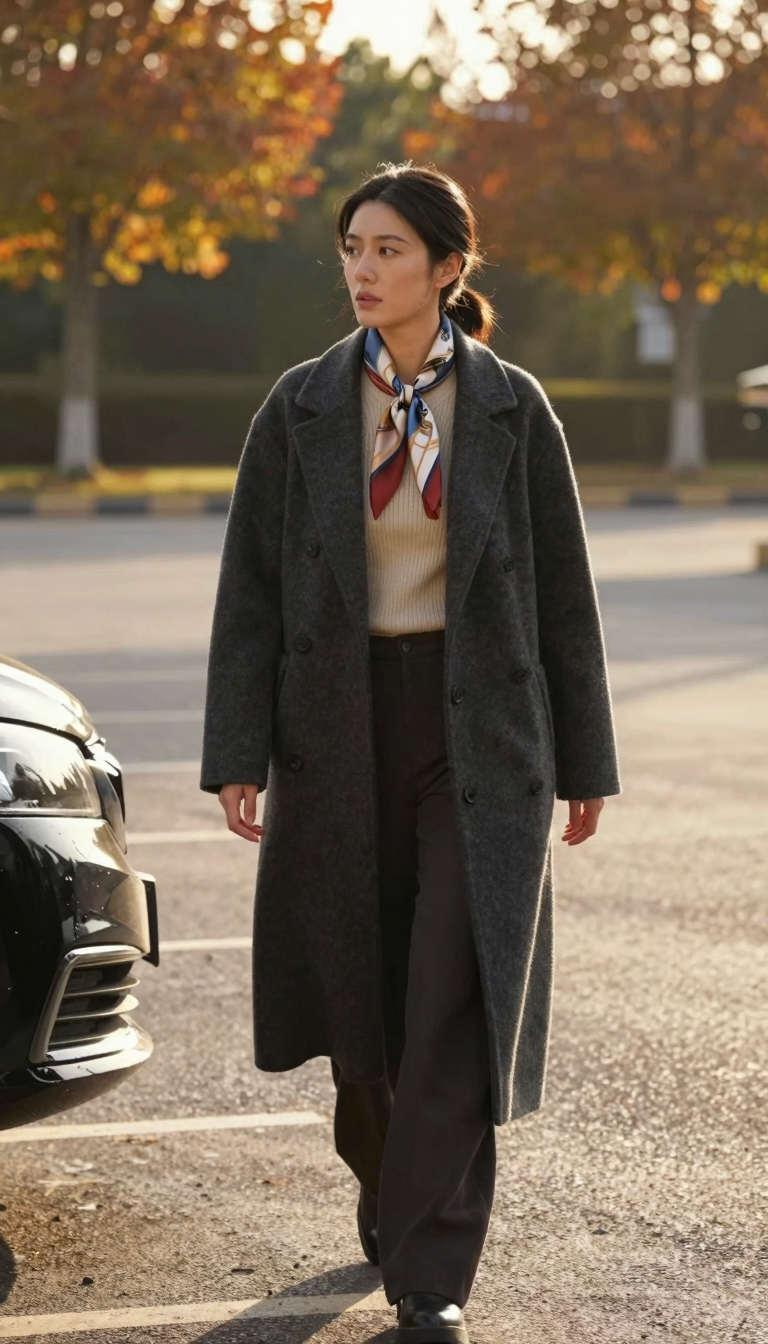
The charcoal coat's weight and the dark trouser create a solid foundation that allows the patterned scarf to read as an intentional choice rather than an accident of styling. The ribbed knit's texture is visible enough to add interest to the neckline area without competing with the scarf's pattern. This pairing teaches you that pattern doesn't require additional pattern to work—a single patterned element sits better against tonal simplicity. The loose scarf tie also demonstrates how a small adjustment in how you wear a piece changes its visual effect: a tighter knot would read different entirely. The outfit as a whole shows restraint: the coat, knit, and trousers are all neutral, and the scarf is the only element making a statement.